Impact
Impact


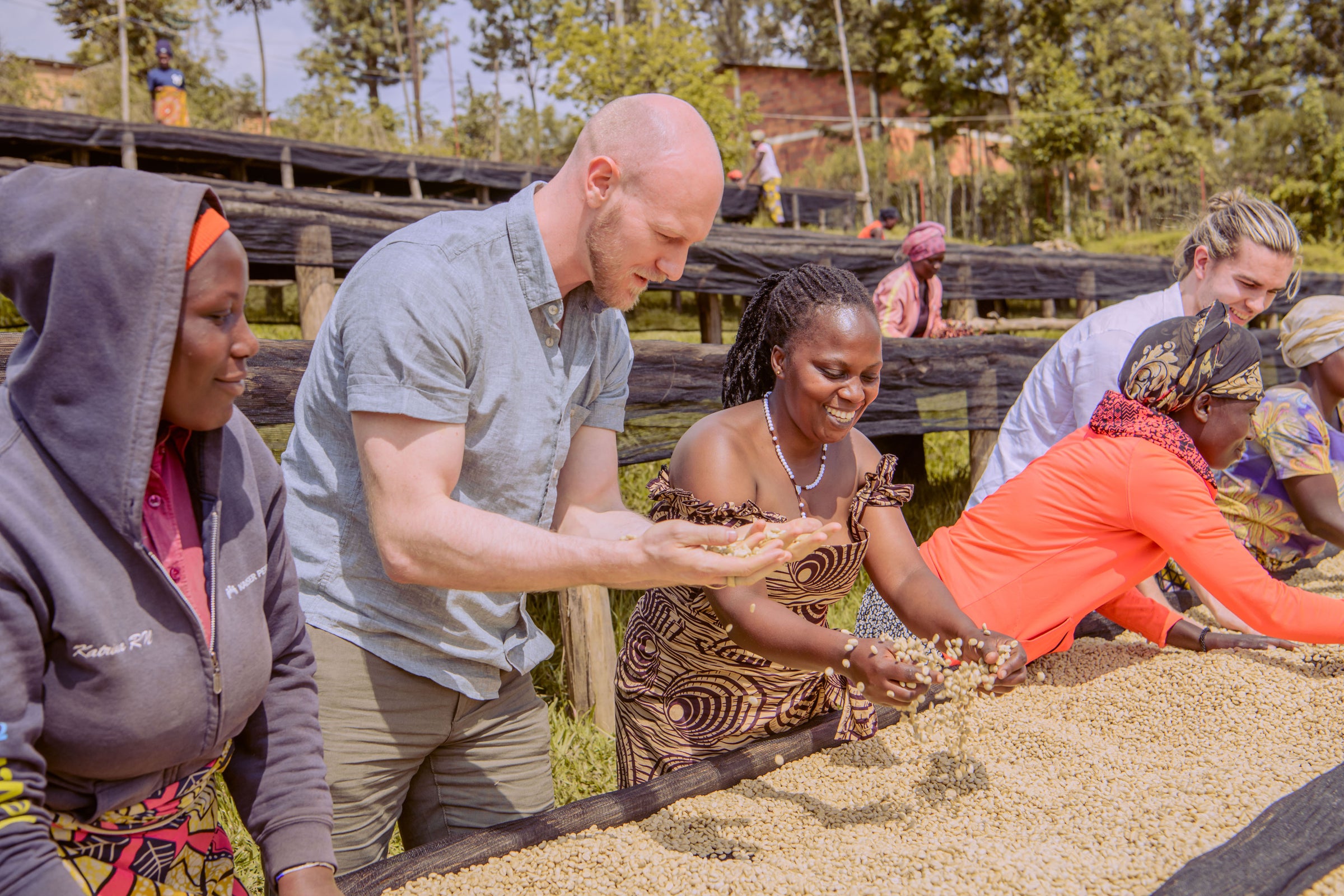
Dash Coffee sources directly from women-led farms in Kenya, Rwanda, and Costa Rica. Every sourcing decision we make is held to the same standard; on price, on certification, on quality, and on the relationships behind every bag.
This page sets out exactly how we buy coffee and what that means in practice. No aspirations. Just the numbers.
Specialty coffee takes up to three years to grow. The farmers who grow it are skilled professionals: agronomists, processors, business owners. They deserve long-term partners, not spot buyers chasing the lowest price.
We buy directly from named farms in Kenya and Rwanda. Our Costa Rican coffee is sourced through a trusted importer with a direct relationship to Agropecuaria Hellen. We pay 55% above Fair Trade minimum on every purchase, every time. The relationship between Dash and our producers is built to last because great coffee only comes from farms that can plan five years ahead, not survive season to season.
Women perform the majority of labour in coffee farming globally. They are consistently underpaid and underrepresented in ownership and leadership. This is not a niche issue — it is structural.
Dash sources exclusively from farms and cooperatives with female leadership. Not as a marketing position, but because these are the farms producing the most meticulous, consistent, high-quality coffee we have found.
Helena Mora leads Agropecuaria Hellen in Costa Rica. The Hinga Kawa cooperative in Rwanda's Gakenke District was built by women farmers who have spent decades developing their craft. The Sakami cooperative in Kenya is women-led and organic certified.
The quality and the mission are the same thing. That is not a coincidence.
When farmers are paid what their coffee is worth, they make their own decisions about what to do with that income. For many of the women in our partner cooperatives, that means healthcare for their families.
We don't run a healthcare programme. We pay a price that makes it possible.
All of our packaging is fully biodegradable. Our coffee is certified organic at origin in Kenya and Rwanda. We work only with farms and processing facilities that meet strong environmental standards.
The farms we source from preserve natural land deliberately. At Agropecuaria Hellen in Costa Rica, 50% of the farm is kept as natural forest — a decision that shapes the soil, the microclimate, and the cup.
Good farming and good coffee are not in conflict. They are the same thing.
When farmers earn a sustainable income, their children don't have to travel far to get an education. Schools closer to home. Stability that extends beyond the harvest season.
We don't run an education programme. We pay a price that makes it possible.
The standard doesn't change
Every bag you buy comes from a named farm, a named producer, and a price that reflects what the coffee is actually worth.


